
ELFD certifies an intervention specialist
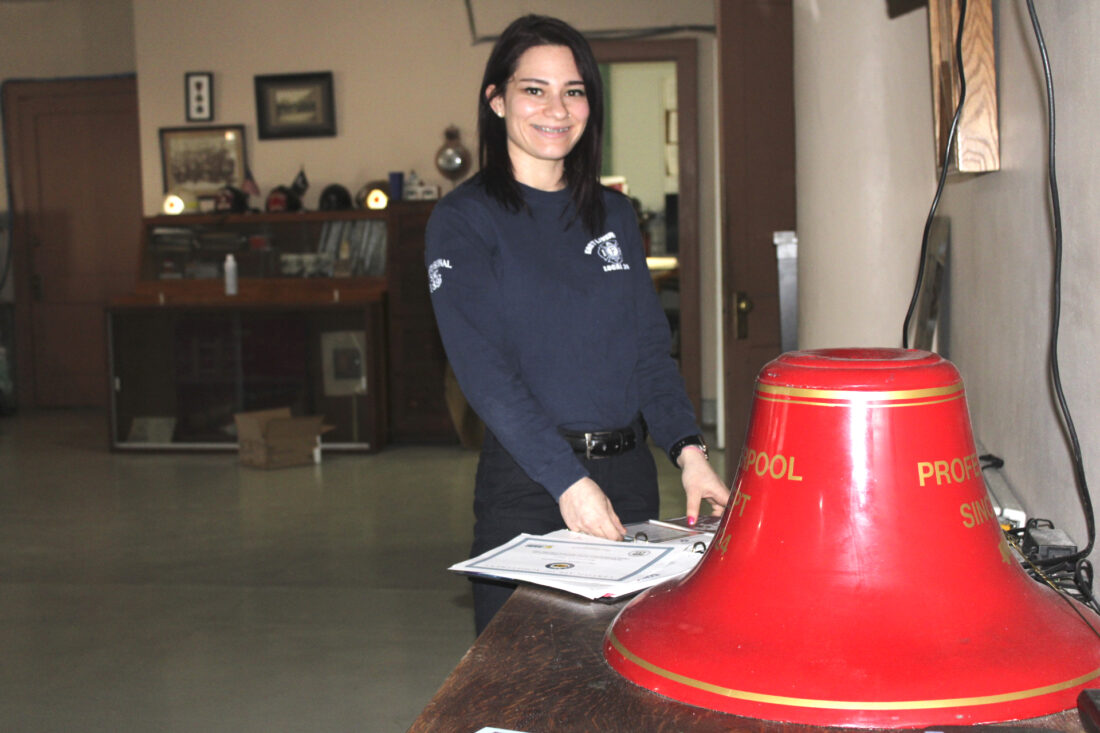
East Liverpool Firefighter Brittany Hill shows the resources binder she brought back from the Crisis Intervention Team training for fire and EMS personnel sponsored by the Columbiana County Mental Health and Recovery Services where she received her intervention specialist certification. (Photo by Kristi R. Garabrandt)
EAST LIVERPOOL — East Liverpool Firefighter Brittany Hill was one of three firefighters to complete The Crisis Intervention Team training for fire and EMS personnel.
Hill, along with Firefighters Amanda Noel and Amanda Hoon of the East Palestine Fire Department, were the first to complete the training.
This was the first time this training has been held in Columbiana County and was sponsored by the Columbiana County Mental Health and Recovery Services with support from the National Alliance on Mental Illness (NAOMI), according to a Columbiana County Mental Health and Recovery Services social media post.
Hill along with Noel and Hoon spent 20 hours earning their Intervention Specialist certifications that will allow them to provide support or access needed support services for crisis situations while responding to fire department calls.
They not only learned the many resources that Columbiana County offers to those in a time of crisis, they also trained on deescalation techniques for mental health and substance abuse situations and covered topics on substance use, mental health, impact of trauma, supporting both veterans and active duty military, working with those who have special needs, legal issues, suicide prevention, human trafficking, effects of poverty and working with children services.
Hill said being an intervention specialist for the fire department will allow her to help people with mental health or addiction issues by being aware of the resources out there that she can get them set up with.
“That class was great, because it was the first time I actually found out how many different resources there are available,” Hill said. “I think we should utilize them for the citizens.”
She also noted that she believes there are a lot of people out there who are not aware of these resources.
She went on to say that she seeks training opportunities and requested to take this training, which turned out to be one of the best classes she has ever taken and believes all first responders should take the training.
She said she wanted to take the class because it sounded interesting to her, and she tends to get a lot of mental health or trauma calls.
“I wanted to know how to better assist them,” Hill said. “I think that learning deescalation better helps the situation than having the police come and pink slipping them which could make it worse. There is a time or place where that does need to happen, but at least if they are willing to come with us, it calms the situation down a lot.”
Fire Chief Antony Cumo, ELFD, said that Hill came back from the training with a lot of resources the fire department wasn’t even aware of being available.
“It’s a lot of little things; a lot of pieces of the puzzle that you never thought of and that’s all the stuff she learned in the class,” Cumo said.
He also said having an intervention specialist in the department means the department now has a go-to person instead of having to call someone in from the outside and that she can initiate things to help or deescalate situations instead of having to wait for outside services to respond
Hill brought to the department from her training a binder full of contact information and resources that she is sharing with her fellow crew members and chief and can keep in the ambulance with her to have the information at her fingertips when needed.
Hill and Cumo both agreed that many of these resources can be valuable in the East Liverpool community.
She said she hopes to be able to use her training to help the community and educate people on the resources available.
Hill said she believes the training will be invaluable to her as she responds to calls, especially knowing how and when to contact children services or how to assess veterans to handle their calls better.
She said the human trafficking element opened her eyes to the issue and was interesting to learn.
In the case of a fire call, where a family possibly loses everything, Hill said she feels she will now be better able to provide some assistance in helping the family cope in the intermediate aftermath.
Due to Hill’s participation in the training, she was able to bring a $500 grant to the ELFD to provide community outreach and education on the many services and resources available.
While she has not decided how to use the grant yet, she said she does have some ideas she is working on and that it is her decision on how to use the grant as long as it is used for community outreach.
Hill said she loves the community she grew up in and wants to help the community and this training will allow her to better do that.
kgarabrandt@mojonews.com