
Trending
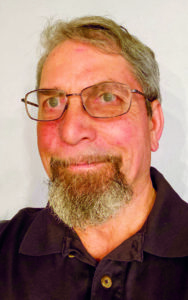
I say my friend Bruce Nielsen was an "interesting" person because it would have irritated him. If somehow he is reading this in The Afterlife News, he will be furrowing his brow and clearing his throat to harrumph.
Bruce pointedly disapproved of calling someone "interesting." It reveals a paucity of vocabulary. Worse, it is vague and contradictory; either a mild compliment or sly insult, a backhand way of saying someone is odd.
Bruce was not a glad-hander or a back-slapper and definitely didn't do "vague." His manner was modest and deferential, adept at turning a conversation to the interests of who he was talking to, but tenacious though polite in debating a point, relishing the back-and-forth. His wife Mary Ellen (nee Klinc) said her mother dubbed him a provocateur for his enjoyment of initiating debate.
Truth is he was a little odd in the eyes of many staff, patients, doctors and board members he was hired to shepherd as president of East Liverpool City Hospital back in the 1980s. People hereabouts are huggers and speak Ahia Valley Hoopie. Bruce was proper though friendly and spoke Eastern Seaboard gentry. He conversed in logical, well-phrased, clearly spoken, complete sentences with nary an "uh" or other vocal pause unless for emphasis. He was smart, and it showed. His manner was impressive, but doubtless put off or intimidated some who didn't get to know him.
Of Scandinavian descent and looked it, tall, blond, handsome Bruce Monrad Meilinggaard was born March 20, 1947, in Connecticut. His father died before he was four. His mother raised him, an only child. After college, before starting his career in health care administration, he reached into family antecedents and took "Nielsen" as a much easier last name.
In part due to my original sin (I was an English major), Bruce's style and dry, wry sense of humor clicked with me, especially when it came to fencing with words.
He and I plopped into the East Liverpool, Ohio, social stewpot at about the same time, 1979 or '80, me as a wayward news reporter and photographer hired when one day I walked into Glenn Waight's office at The Evening Review (Can you believe we published an evening paper back then, delivered to your doorstep before supper?), and he as a U of Michigan-educated hospital administrator in his first gig as Head Cheese.
City Hospital was part of my beat, which is how I first got to know him. Allowing a news reporter to attend and report on monthly meetings of the hospital board seems quaint today. Members of the board, representing the town's upper crust, expected Bruce to ride herd on the other power centers competing inside the hospital walls: the workers' union, the nurses' union, the medical staff, and last but certainly not least, women of the auxiliary.
He and Atty. Jackman Vodrey jousted with neurosurgeon Dr. Gene Samuelson, who had bought the former osteopathic hospital a few blocks away from City Hospital and were locked in an acrimonious legal and regulatory battle. Shortly after I began writing this column in 1983, I wrote a satirical piece skewering both City Hospital and Potters Medical, something I can't imagine getting away with today. Both Bruce and Potters Medical administrator David Poole sent me notes of congratulations.
Until he threw his back out, Bruce was among a coterie of racquetball players using the court at what is now the downtown YMCA. One day at racquetball he told me that Patty Kumick was leaving the hospital's post as community relations director, and urged me to apply for the job.
As a proud member of the Fourth Estate, I thought PR was beneath me. Then he told me how much it paid, almost twice my newspaper salary. That job somehow lasted 14 years and helped Honey and me to a comfortable living and retirement, for which I remain in his debt.
Bruce, however, did not last at City Hospital. A year after I joined him at ELCH, the board terminated him as CEO and elevated COO Mel Creeley to chief executive. In an odd gesture it allowed Bruce to remain as president in title only until he found another position. Having no duties, he haunted his office for an uncomfortable year until hired as CEO of Shriners Hospital for Children in St. Louis, Mo.
That didn't last, either, but these experiences led to his true calling: founding an innovative company for placing unemployed hospital administrators, CEOs, nursing directors, etc., in temporary positions while hospitals conducted lengthy searches for permanent hires. The Nielsen Healthcare Group was a brilliant and lucrative success, so successful that Bruce and Mary Ellen eventually worked only part-time and indulged their love of travel, with Europe a favorite destination. They bought homes in Florida and in the arts and music enclave of The Berkshires, where the Boston Pops summered, and implored friends to vacation with them, which Honey and I took advantage of one week.
Thoughtful and generous with their time and resources, they never forgot their numerous old friends in East Liverpool. They stayed in touch and stopped in to talk over lunch or dinner whenever passing through.
After 27 years they sold NHG, enjoying full retirement until Bruce began a frustrating deterioration of his once robust health, which ended May 16, 2026, with his death at a hospice in Florida. Read his full obit at baldwincremation.com.
Bruce Nielsen was a unique and, yes, interesting person, and he was my friend.