
East Liverpool WWII POW’s memorabilia on display at National Air and Space Museum
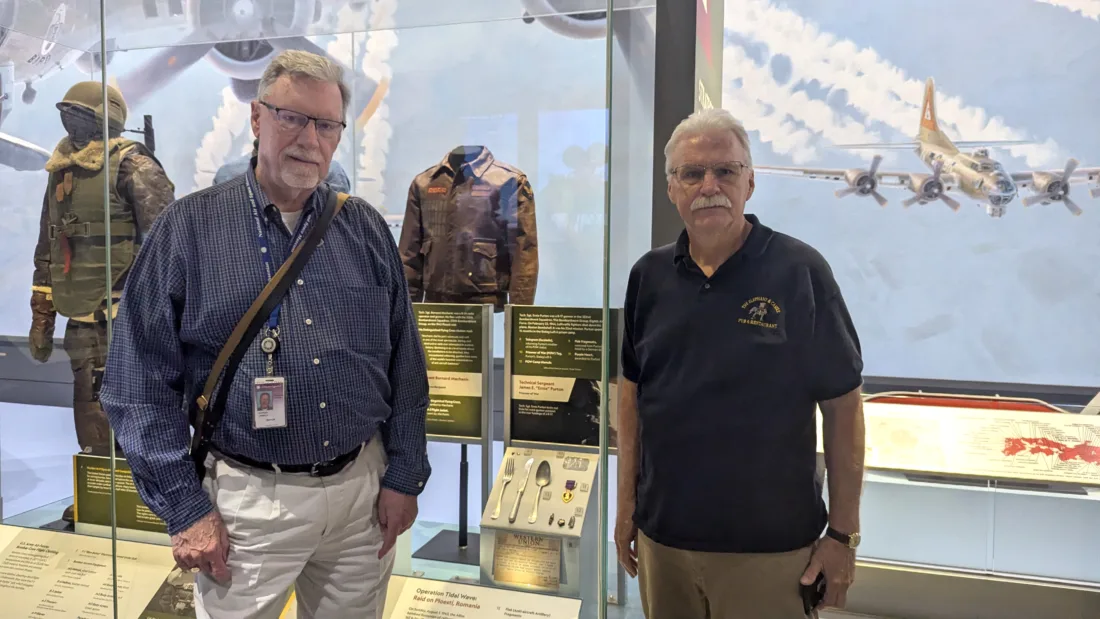
Jim Purton and his brother Mike stand next to the display case holding their father’s WWII veteran and Prisoner of War (POW) the late James E. (Ernie) Purton’s military memorabilia at the National Air and Space and Museum in Washington, DC. (Submitted photo)
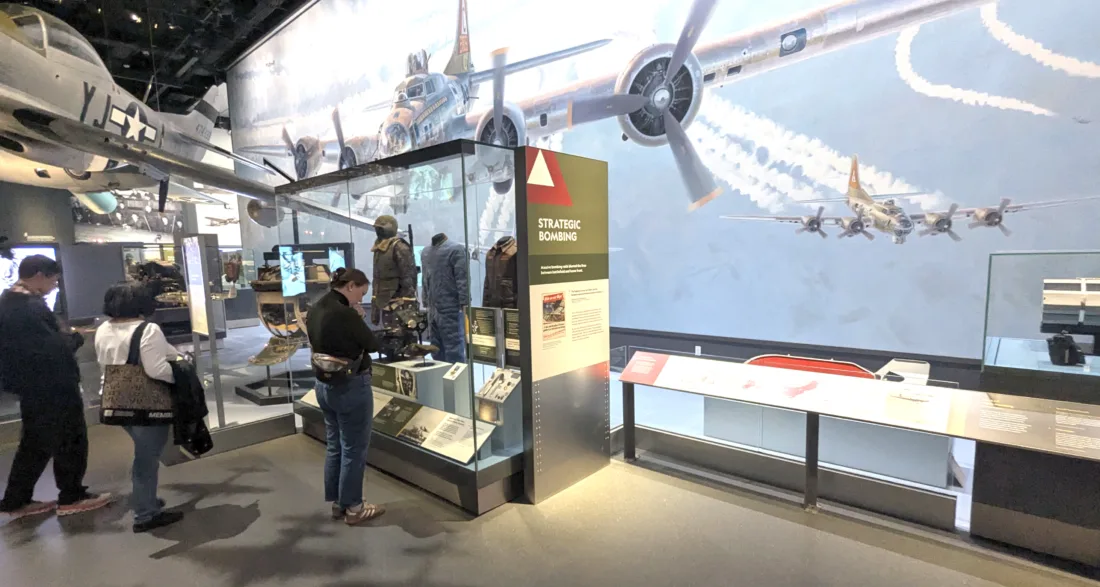
A mural that was painted as part of the Jay I. Kislak World War II in the Air Gallery at the National Air and Space Museum in Washington, D.C. by Keith Ferris titled “Fortresses Under Fire” depicts a B-17, the type of plane which WWII veteran and Prisoner of War (POW) the late James E. (Ernie) Purton was flying when he was shot down in February 1944. (Submitted photo)
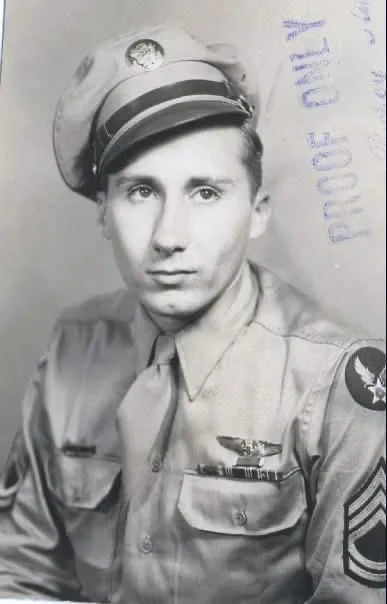
WWII veteran and Prisoner of War (POW) the late James E. (Ernie) Purton’s official military photograph. (Submitted Photo)
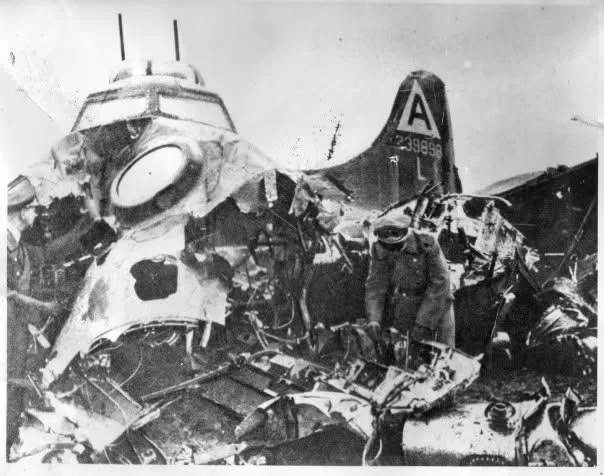
German soldiers search the wreckage of the bomber WWII veteran and Prisoner of War (POW) the late James E. (Ernie) Purton and 10 crew members were on after it was shot down by the Germans in February 1944. (Submitted Photo)
Jim Purton and his brother Mike stand next to the display case holding their father’s WWII veteran and Prisoner of War (POW) the late James E. (Ernie) Purton’s military memorabilia at the National Air and Space and Museum in Washington, DC. (Submitted photo)
A mural that was painted as part of the Jay I. Kislak World War II in the Air Gallery at the National Air and Space Museum in Washington, D.C. by Keith Ferris titled “Fortresses Under Fire” depicts a B-17, the type of plane which WWII veteran and Prisoner of War (POW) the late James E. (Ernie) Purton was flying when he was shot down in February 1944. (Submitted photo)
WWII veteran and Prisoner of War (POW) the late James E. (Ernie) Purton’s official military photograph. (Submitted Photo)
German soldiers search the wreckage of the bomber WWII veteran and Prisoner of War (POW) the late James E. (Ernie) Purton and 10 crew members were on after it was shot down by the Germans in February 1944. (Submitted Photo)
Trending
EAST LIVERPOOL - Military memorabilia of an East Liverpool native has been installed in a national museum in Washington, D.C.
Memorabilia and a Purple Heart Medal belonging to the family of the late James E. (Ernie) Purton, a World War II veteran and Prisoner of War (POW), have been included in the New World War II IN the Air gallery as part of the Air and Space Museum's 50th Anniversary.
The National Air and Space Museum, one of 21 Smithsonian Institution Museums, has two locations - in Washington, D.C. and Chantilly, Virginia, which according to the museum's website focused on objects in aviation and space history with a premier collection of more than 5,400 "air and space artifacts, stories and expertise."
Purton's memorabilia is featured as part of the Jay I. Kislak World War II in the Air Gallery at the Washington, D.C. location along with "people and artifacts that put aviation at the center of the 20th century's largest and most impactful conflict and made America a superpower," read a media release from the National Air and Space Museum.
The exhibit features famed aircraft, tools used by concentration camp laborers assembling German V-2 rockets and more.
The items featured in the gallery, which is a permanent exhibition, according to the National Air and Space Museum will provide visitors "new perspectives on the remarkable story of how the Allies won the war in the air through some of the museum's most notable never before displayed artifacts."
Samantha Kinemond, Purton's granddaughter, said on the exhibit that it is overwhelming to her because you never think that somebody you know would be on display at the Smithsonian and its a great honor to have him there.
According to Purton's son James (Jim), James, a lifelong East Liverpool resident, was stationed in Great Brittain during WWII, before the bomber he was on along with 10 other crew members was shot down in Germany in February 1944. He was captured after being shot down and taken as a POW for approximately 14 months.
James was injured in the crash and treated by German doctors at the scene of the crash prior to being taken prisoner.
Jim said his father's injuries were not severe, and that eight crew members survived the crash, but two others did not.
Jim said his father had artifacts from that incident along with his time served as a POW, which he inherited when his father passed away. He was affiliated with the National Air and Space Museum as a volunteer for more than 20 years and was familiar with the curator and his development of the new exhibit and choose to donate his father's artifacts to the Museum for it.
Some of the artifact's donated include a photo of James, his German POW dog tags and eating utensils with German markings, both of which were issued to him by the Germans at the concentration camp he was held at.
James and several others escaped the concentration camp, according to Jim, when the Russians started moving in and the Germans did not want the Russians to get the prisoners. They started moving them by making them walk muddy roads through the forest away from the camp.
Jim said his father told him he had enough and ran off into the roads and remained hidden there until night came. They remained on the run for approximately three to five days trying to find food to survive on when a tank with British soldiers found them and repatriated them.
The exhibit also contains shrapnel that was removed from James's skull and leg by a German doctor at the crash scene. Jim said the curator at the museum was very interested in the pieces of shrapnel because while it is a common item in military exhibits, having shrapnel retrieved from someone's body is not.
Kinemond recalled her grandfather always carrying a metal card in his pocket and joked that he had that and that wouldn't be the only thing setting metal detectors off because he still had shrapnel in his body from being shot down.
James was awarded two Purple Hearts - one for being a POW and one for the injuries sustained in battle when his plane was shot down. The Purple Hearts along with documents and photographs from his time in the military are also a part of the exhibit.
Jim noted that while James had three brothers in the war as well, but James was the only one involved in combat.
"My father was on his way back to the United States when the war ended," Jim said. "He had a pretty tough time of it but was fortunate to get out of that forest march because who knows what would have happened if he didn't."
Kinemond noted that it is cool to see the family tradition of the military with multiple families serving. Her father served in the Army Air Corps, his son Jim who served in the United States Air Force and his great-grandson, her son, is now a member of the United States Air Force.
"It's a huge honor to have him in there and to have someone you know tied to the Smithsonian is pretty cool," Kinemond said.
Jim recently traveled to Washington, D.C. to see the exhibit. Kinemond is planning to go see it and hopes to see it with her son.
Kinemond described her grandfather as a joker and said, "you would never know that he went through what he went through because he was always the happiest guy who knew everybody, and everybody knew him would never know that he spent over a year in a prison camp and to see what he saw."
Kinemond believes her grandfather would be proud to be a part of this exhibit, but he would also probably be shy about to as he was one who never really wanted credit for a lot of things but would probably believe this to be pretty cool.
James passed away in 1997.