
The Great Pollinator Adventure brings books, STEM and environmental learning to Hancock County youth
Trending
NEW CUMBERLAND, W.Va. - Hancock County youth spent their summer learning about butterflies, bees, flowers and other important pollinators through an innovative program that combined reading with hands-on science and environmental education.
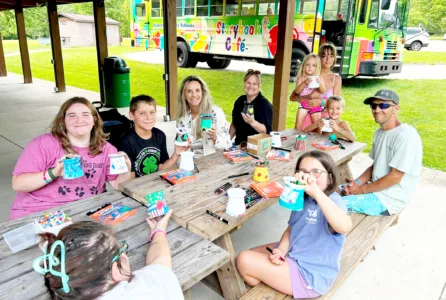
From July 6 through July 31, Hancock County WVU Extension and Hancock County Schools partnered to bring the 2026 Storybook Cafe, The Great Pollinator Adventure, to six locations across the county. The program engaged 205 youth from preschool through high school, with the average participant being a third grader.
Storybook Cafe is a literacy-based outreach program designed to bring books and educational experiences directly into communities. Each week, youth explored a new aspect of pollinators while reading A Butterfly Is Patient by Dianna Hutts Aston. The program connected the book's themes to agriculture-based STEAM activities that encouraged youth to explore how they could help pollinators in their own communities.
Each week focused on an important need of pollinators. During the first week, youth learned that butterflies are pollinators and designed their own butterflies. The second week focused on food as youth created wildflower and milkweed seed bombs. During the third week, participants explored the importance of water by building pollinator fountains. The final week focused on shelter and safety as youth constructed bee hotels.
The hands-on activities gave youth opportunities to apply what they were learning rather than simply reading about pollinators. Through planting, building, designing and experimenting, participants explored science and environmental concepts in creative and age-appropriate ways.
"Seeing the kids learn through hands-on, experiential activities was one of the most rewarding parts of this program," said Zachary White, WVU Extension 4-H Youth Development Agent. "They weren't just reading about pollinators--they were building, planting, experimenting and creating things that showed them how they could make a difference. Watching their excitement as they discovered something new really demonstrated the power of experiential learning."
Literacy remained at the center of the program. Every youth who participated received a free book each week, allowing participants to build their own home libraries and continue reading after the program ended. More than 820 books were distributed throughout the four-week program.
The program also demonstrated strong educational outcomes. Of the 205 participants, 57 completed a post-program evaluation. Youth reported high levels of learning across all four activities, with average scores ranging from 3.38 to 3.49 on a four-point scale. Building a Bee Hotel received the highest learning score at 3.49.
Participants strongly agreed that they learned the importance of pollinators, with an average score of 4.59 out of 5. Their rating increased to 4.70 when asked whether they learned how they could protect pollinators.
The activities were also highly engaging. All four activities received enjoyment scores above 4.25 out of 5, with Building a Bee Hotel receiving the highest score at 4.57.
The impact extended beyond pollinator education. Youth reported that they liked STEAM more because of the program, with an average score of 3.23 out of 4. They also strongly agreed that they liked reading more because of Storybook Cafe, receiving an average score of 4.35 out of 5. Participants reported reading an average of four days per week during the program.
Youth feedback reinforced these findings. When asked about their favorite parts of Storybook Cafe, participants highlighted receiving and choosing new books, completing hands-on projects, learning about pollinators and spending time with friends. Bee hotels, pollinator houses and science activities were among the experiences participants enjoyed most.
Many participants indicated that they would not change anything about the program. Suggestions for improvement included adding more activities for older youth, providing additional book choices and offering more take-home projects and interactive experiences.
The Great Pollinator Adventure demonstrated how literacy and experiential learning can work together to create meaningful educational experiences for youth. By pairing books with hands-on STEAM activities, Hancock County WVU Extension and Hancock County Schools provided youth with opportunities to learn about the environment, develop practical skills and discover ways they can make a difference in their communities.
Through Storybook Cafe, youth left with more than a new book. They gained new knowledge about pollinators, practical ideas for supporting the environment and positive experiences with reading, science and hands-on learning.
(Submitted Material)