
Ol’ Food cooked my pet turtles
“Why do you like the movie ‘A Christmas Story?'” asked Snickers, my favorite son-in-law.
“Because I grew up in the ’50s” was not much of an answer for him.
Fighting clinkers in a coal furnace, the power of holding a loaded and cocked BB gun, facing up to a bully, wearing winter hats with corduroy ear flaps, getting bawled out because Dad worked night turn at the mill and I woke him up, freezing my hands helping put on tire chains in slushy snow because they didn’t plow the side roads – these memories from my own childhood were similar to the depiction of Ralphie’s family as told by “A Christmas Story” author Jean Shepherd. A groundbreaking radio DJ, master storyteller and writer, Shepherd was born in 1920 and I in 1950, but not much was different, really, in the way that families lived from his time to mine.
In this column I have called my mother Ol’ Food and father Paw-Paw, but their names were Lucille and Lester. Lester had a degree in agriculture and was working for the state. Lucille was working at a drugstore soda fountain when he met her in Hamlin, W.Va. Engaged to a girl in another town, he wrote and asked for his ring back.
They married, had two daughters, and moved 11 times in 10 years. One job was checking on the mules the government gave farmers. (What was he going to do if the mule wasn’t being used? Repossess it?) He resigned as farm manager at a state women’s prison because the inmates were chasing him, then quit the same job at a men’s prison because Mother feared the girls would be molested.
I was born in East Liverpool City Hospital because they had moved back to Hancock County and were living in the old Jessie Murray place in Shepherd’s Valley, behind the state park. (I met some of the Murray family a few years back. The “old Jessie Murry place” rang a bell with none of them.) We moved back to Hamlin for awhile but my Miller grandparents were elderly and Grandmother Edythe especially was chronically ill. Back to Hancock County we came in 1955, with Dad employed to help Grandpa Fred with the farm. Fred bought a small house for us a mile away (I suspect with financial help from Uncle Jim, a successful physician in Steubenville). We referred to it as the Little House. “Red” Bailey owned the property behind, a hayfield which I memorably set on fire one day when burning the trash, one of my few chores. As the baby of the family and long-awaited male child, I was coddled and favored, according to my sisters, who were six and eight years older.
My sisters and I had to use a rotary push mower to mow the lawn. It was mostly stubborn clumps of grass we had to run at several times to cut. Thankfully, for years much of the lawn was a maze of weed-grown ditches and dirt piles, dug up by father to put in a new septic field. Someone had planted a willow tree and its water-seeking roots clogged the field pipe. When I got my first bike I jumped on without knowing how to brake and rolled downhill hurting myself when I crashed into a dirt pile.
One Christmas I got a BB gun and used it to hunt birds, pesty house sparrows only on father’s orders. I confess here and now that I shot at pretty much any bird until my conscience caught up with me one day as I held a beautiful songbird, dead by my thoughtless action, limp and still warm in my hand.
In the movie Ralphie got a mouthful of soap for a bad word. When I wrote one on a frosted window pane, Ol’ Food told me it was a bad word, as if I didn’t know. “What about —-?” I asked innocently, reciting others I’d heard. We learned sex education on the playground, not at home.
My pets included little turtles kept in a water dish. A bantam rooster, referred to as a “banty,” crowed and would set if given an egg. My main pet was my dog Betsy, a toy Manchester named for Davey Crockett’s rifle in the Fess Parker Disney TV series. Betsy was one of the two great dogs of my life. She went where I went, did what I did. In the spring I would pick and eat water cress, which I grew up calling “Cressy greens” from my mother. A mustard green, it grew wild and plentiful on the dug-up septic field. Betsy ate it because I did.
The Little House and Miller farmhouse both had coal furnaces. It was warm heat but dirty heat, and the white curtains my mother hung required regular washings. Our house like most others had a small cast iron door in the basement wall and a coal bin inside. Coal roared down a chute made from a piece of tin roofing. Tending the furnace, which consisted of shoveling in coal, taking out ashes and working the heavy steel shaker grate, was everyone’s job, and I did it when I was big enough. Routinely a piece of half-coal, half-rock did not burn up and jammed the shaker grate. Ralphie’s father’s memorable fight with his coal furnace in the movie began with the battle cry, “It’s a clinker!”
Heat from the coal furnace came up through ductwork and large steel registers. They were a favorite place to stand and warm up in the cold winters we had back then.
My pet turtles, to which I had given names like Gertrude and Henrietta, crawled around in their water dish and ate turtle food. Mother often set them on a windowsill to get the sun, but one cold day the turtles became so lethargic that Ol’ Food sat their dish on a register and forgot them.
When I came home from school my mother told me, voice shaking and tears in her eyes, that she had cooked my turtles. It was one of the hardest things she ever had to do, she always said. I was not truly emotionally attached. She probably thought I was being brave. They were just turtles.
Community News
Calendar
MON/12-29 Beloit Village council, 6:30 p.m., village hall, interview for captain, lieutenant and fire chief ...
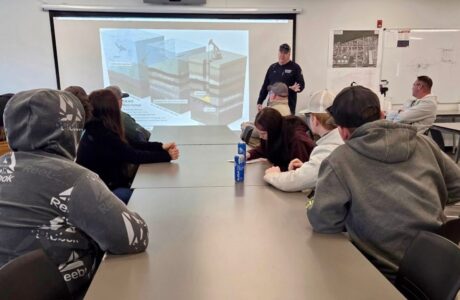
USA STUDENTS VISIT ERGON
Upper Ohio Valley Museum and Learning Center at the Lou Holtz Hall of Fame to host workshops each month
EAST LIVERPOOL — In recognition of the upcoming 250th anniversary of the United States, the Upper Ohio Valley ...
Southern implementing “YOU Matter Here” campaign
SALINEVILLE – Southern Local Schools will soon implement a campaign in partnership with the Columbiana County ...
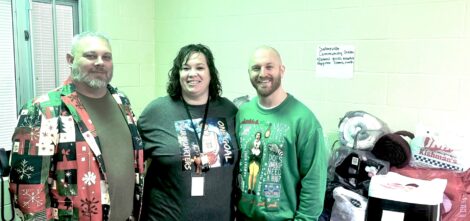
Southern celebrates 12 Days of Giving
Ol’ Food cooked my pet turtles
“Why do you like the movie ‘A Christmas Story?’” asked Snickers, my favorite son-in-law. “Because I ...